


Board Game Tables: Choose by Play Height and Board Storage
The board comes out at eight, and by eleven the dining table has stopped being a dining table. The game is half finished, the box lid has slid behind the fruit bowl, and someone is asking whether the pieces can stay out until morning. A board game table is an answer to that question: a surface that holds the position overnight and does not have to be cleared for breakfast.
The four tables here answer it in visibly different ways, and the differences are settled well before finish or style. Two decisions do most of the work. The first is the height you want to play at, because a 30-inch table is played from dining chairs and a 22-inch table is played from its own stools. The second is whether the board is the top itself or concealed beneath it. Work those out and the round-versus-square question tends to resolve on its own.
Play at Dining Height, or Drop the Game Into the Room
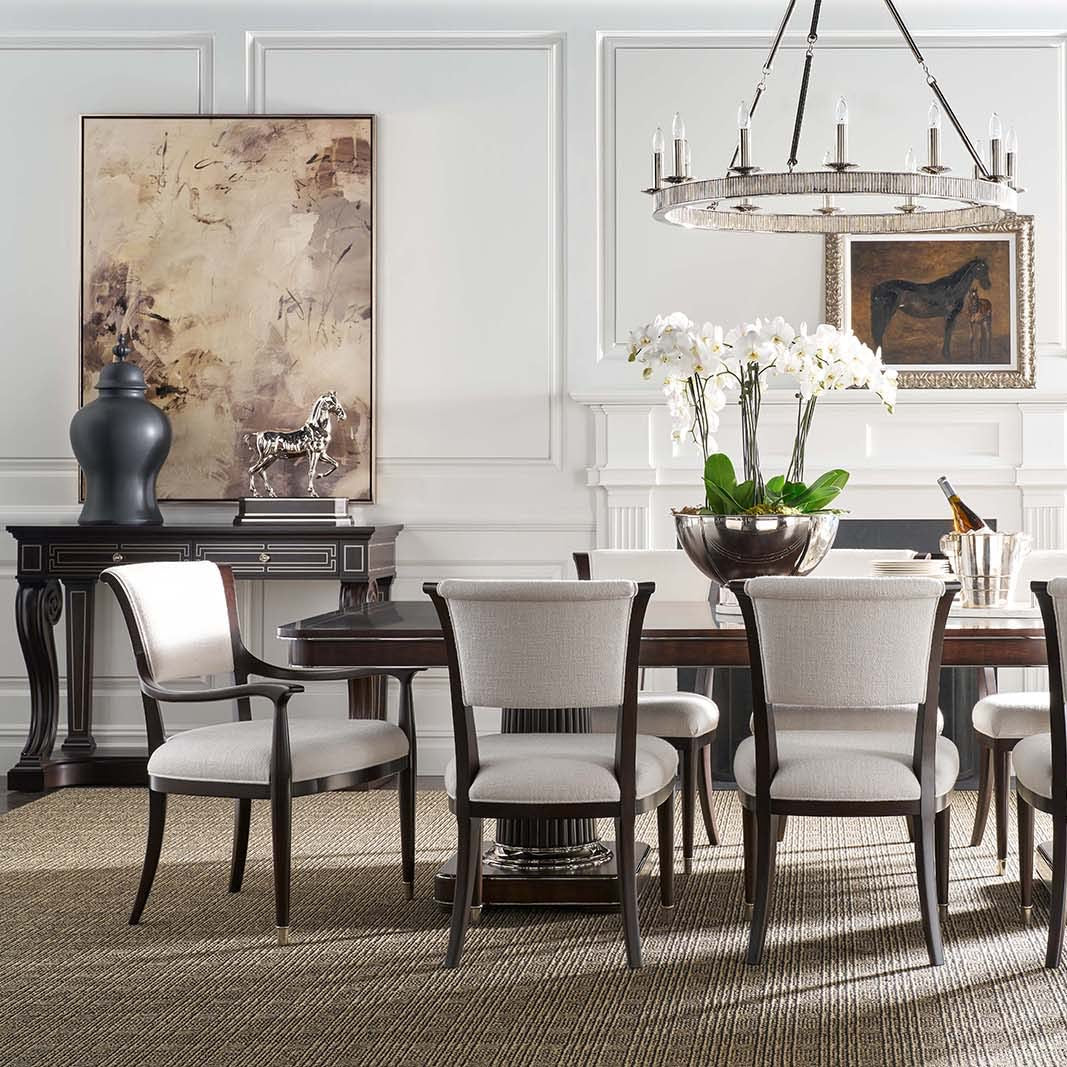
Three of these tables stand at 30 inches, dining height, which means the chairs you already own will do and the table can hold a lamp the rest of the week. The Grandmaster Games Table is the round one: a 42-inch top with a circular moulded edge, carried on an octagonal flared column over a quatrefoil scrolled base, with 26 inches of clearance beneath the apron. With one column instead of four legs, nobody at the rim is sitting over a corner, a small thing that becomes noticeable four hours into a game.

The Oscar Activity Table - Hazelnut - Walnut Solids is the square version of that height at 38 by 38 inches, in walnut solids and veneers under a hazelnut finish. The Pierre Acrylic Backgammon Table stands 30 inches high as well, and at 40 inches wide its clear acrylic frame with metal accents takes up almost no visual room, the sort of table that is easy to walk past when nothing is on it.


Then there is the other height. The Low Game Table With Four Stools is 36 inches square and only 22 inches tall, and its four 20-inch stools sit beneath the top. This is not a dining table pretending to be a game table; it is lounge furniture with a board set into it, low enough that the play sits nearer your lap and the piece joins the seating group instead of standing apart from it. It also arrives with no assembly required, which is worth something in a table of iron, recycled wood and leather that weighs 150 pounds.

Where the Board Lives Between Games
On the Grandmaster, the board stays put. The centre of the top reverses between leather and an inlaid chess board, and a backgammon board is inlaid into the surface as well, with a wooden chess set and backgammon counters included, so the table is ready the day it arrives. The Pierre Acrylic Backgammon Table makes the same commitment in a different material, a backgammon board held beneath a glass top inside a clear frame. A permanent board is a commitment and also a pleasure: the table is always ready, and it never pretends to be something else.
The Oscar takes the opposite approach. Its top lifts off and reverses to a chess board, a backgammon board is set into the table beneath it, and drink holders pull out from each side. Between games the top goes back on and the piece is simply a square walnut activity table, useful for a puzzle, a pile of post or a plate of food. The trade is a lid that has to be lifted and set down somewhere, and a second identity that stays tucked underneath the first.
A Board Game Table Is Asked to Do More Than One Thing
That hidden second identity matters more than it first appears. A board game table is rarely asked to host one game forever. It has to take a big-box game with a hundred small pieces on a Saturday, a jigsaw that stays out for a week, a long session that runs past midnight, and then a birthday cake. Buying advice written for the category tends to draw the line in the same place, contrasting board game tables, which have to serve a varied group of games and the occasional family meal, with poker tables built for focused single-game sessions.
That is the honest argument for a concealed board. A table that hides its playing surface can be the only table in a small apartment or a study that doubles as a guest room. A table with an inlaid board is better treated as a dedicated piece, given its own corner and its own light, and the expectation that it will look like a game table all week, which, if you play most evenings, is exactly what you want.
Further reading: Board Game Table vs Poker Table Buying Guide
What the Table Looks Like on a Tuesday
The quality that makes these tables good at games, a board at the centre of the top, is also what makes them hard to place. On the Grandmaster, the chess inlay sits inside a border of mahogany, acacia and oak parquetry in warm brown tones, and from across the room the whole piece reads as a round side table: low-key, dark, quiet under a lamp. Set it beside an armchair and it will look as though it belongs there, until somebody starts setting out pieces.
The Pierre goes the other way entirely. Acrylic and glass give the table almost no visual weight, so what you notice first are the metal accents at the corners and then the board beneath the clear top. In a room that already carries a lot of dark wood, or a lot of pattern, that transparency is worth more than any finish sample.
And the Low Game Table asks for something different again: a corner where four stools can live, and be pulled out as extra seating when the game is over. That is furniture with a social life. A round pedestal is furniture with a quiet one.
Deciding
If the room is where you eat, take a 30-inch table and let the dining chairs do the work. If the room is where you sit, the 22-inch table and its four stools keep the game out of the dining area altogether. If the board should always be ready, an inlaid top, the Grandmaster or the Pierre, gives you that with no ritual of lifting and storing.
If the table has to pass as a plain surface most of the week, the Oscar's lift-off top and the backgammon board beneath it are the more forgiving answer. And if the deciding question is simply how much furniture the room can absorb, the acrylic table is the one that lets everything else show through.

Leave a comment